Featuring
Krupa Pandey , Neurologist & Stephanie Buxhoeveden , MS Researcher and Nurse Practitioner
Close
Sponsored by Bristol Myers Squibb
9 Sep 2026 | ~22:50 Engagement Time
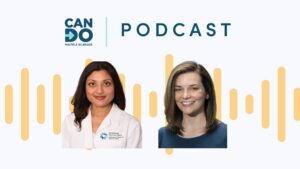
Our host Stephanie Buxhoeveden talks with neurologist and MS specialist Dr. Krupa Pandey about the emerging research into CAR T therapy for multiple sclerosis. They discuss how CAR T works, how it differs from current treatments, what clinical trial participation involves, and whether an immune system “reset” could one day change the way MS is treated.
Thank you to the generous support of Bristol Myers Squibb of this podcast episode.
Disclaimer: This podcast provides general educational information. Can Do MS does not endorse, promote, or recommend any product or service associated with the content of this program.
CAR T Cell Therapy for MS: What We Know So Far
Episode 207 – Podcast Transcription
[Music] Stephanie Buxhoeveden: Welcome to the Can Do MS podcast. I’m your host, Stephanie Buxhoeveden. I live with MS, and I’m also a clinician and MS researcher. Today, I’m really excited to talk to Dr. Krupa Pandey, who’s a neurologist and associate professor of neurology at Hackensack Meridian School of Medicine. Hi, Krupa. Thank you so much for being here. I’m really excited to talk to you today.
[(0:45)] Dr. Krupa Pandey: I’m excited as well. Thanks for inviting me, Stephanie.
[(0:48)] Stephanie: Yeah. We’re talking about CAR T therapy, which has really transformed the treatment of some blood cancers, and researchers are now investigating whether the same technology could have a role in autoimmune diseases, including multiple sclerosis. So let’s start with the basics. What is CAR T therapy, and how does it work?
[(1:06)] Dr. Krupa: So chimeric antigen receptor therapy, which is what CAR T stands for, is a therapy where a individual’s own T cells are removed from their body, and they’re genetically modified to cause the expression of different types of receptors. And using this therapy, we’re able to then harness the power of an individual’s own immune system to change different ways that the immune system communicates in an individual’s body. [(1:34)] Stephanie: That’s so interesting. And I mean, we already have MS treatments that are very good at targeting B cells. I think most people with MS have heard of B cell depleting. So why do researchers think CAR T might offer something different?
[(1:50)] Dr. Krupa: That’s a great question. So I think one of the things that is most frustrating for individuals with MS that I hear as an MS specialist is that they have to take therapies which are given either daily, monthly, you know, every so often, and that can be both disrupting and emotionally remind a patient that they have a chronic condition which requires a chronic therapy. So currently, the belief is that by modifying the immune system, we might be able to then impact the immune system in a way that prevents an individual from having to take a therapy every so often, and might allow them to kind of just live their daily lives without having to take any medication.
[(2:37)] Stephanie: That’s so interesting. So basically, you’re resetting the immune system and like you mentioned, not having to continuously take a therapy. I know B-cell therapies have dramatically changed MS treatment in the time that you and I have been in the field, but it- they don’t work equally well for everybody, or really completely stop progression.
[(2:59)] Dr. Krupa: Absolutely. I mean, I think that I hear from patients many times that there are various different facets that prevent them from even either starting therapy, you know, continuing therapy, or being compliant with therapy. And this would certainly eliminate many of those obstacles, uh, which I think would really be liberating for, for patients, I would imagine.
[(3:20)] Stephanie: I, yeah, I completely agree with you. I mean, I think, uh, DMTs and high efficacy DMTs have changed my life, but as you already touched on, some- it’s not ideal to have to be immunosuppressed for the rest of your life or be on a therapy chronically. So I think it’s a really interesting concept and, and I’m excited to see where it goes. But we’re really very early in the research, right? So where does research currently stand on CAR-T in MS?
[(3:48)] Dr. Krupa: Yeah, absolutely. Unfortunately, we’re just at the tip of the iceberg. I think, um, you know, just like many initial studies with novel therapies, the goal of these types of studies, which, uh, you know, the CAR-T studies are currently in a phase 1B, is we’re looking at a very small population of patients. Um, so, you know, less than 150 patients. And in those patients, the main goal of the therapy is not to see if we can, uh, free patients from ever having to take medication again, but rather really the primary focus is on safety, safety, and safety. So it’s the most important outcome that, uh, researchers are trying to figure out if a therapy like this is even plausible and safe to do.
[(4:36)] Stephanie: Yeah, and it’s not the first cancer treatment that we’ve seen crossover into autoimmune, but can you tell us a little bit about why sometimes a drug might work well in oncology but work differently in autoimmune disease?
[(4:50)] Dr. Krupa: Yeah, absolutely. So it’s interesting cause I actually met a, uh, molecular biologist the other day, and I was telling her about how, you know, they’re really the superheroes because they have figured out how to manipulate the immune system, um, and really treat things like cancer. And then we borrow those lessons from our oncology colleagues in the oncology world because, again, unfortunately, uh, cancers affect a greater number of patients than autoimmune conditions do. And using those, um, those patients and that data, we’re then able to translate it into the immune system because the immune system’s kind of the gatekeeper. It allows, number one, the body to detect when cells that shouldn’t be there are there, and oncology cells are the most common ones that our body continuously identifies and gets rid of. In autoimmune conditions, it’s not necessarily cells, but it’s external factors that somehow then cause the immune system to miscommunicate. So just like in the oncology world where we’ll take the immune system and manipulate it to target cancer cells, in autoimmune conditions, we’ll take the immune system, manipulate it to reinvigorate communication with the immune system.
[(6:04)] Stephanie: I love the way that you just broke that down. I think that’s one of the best examples of how those two things are similar and why a lot of what we have in MS first emerges from oncology, so thank you. Now you’re a site investigator for one of these CAR T studies, and if somebody volunteered for your CAR T trial, what would they be signing up for?
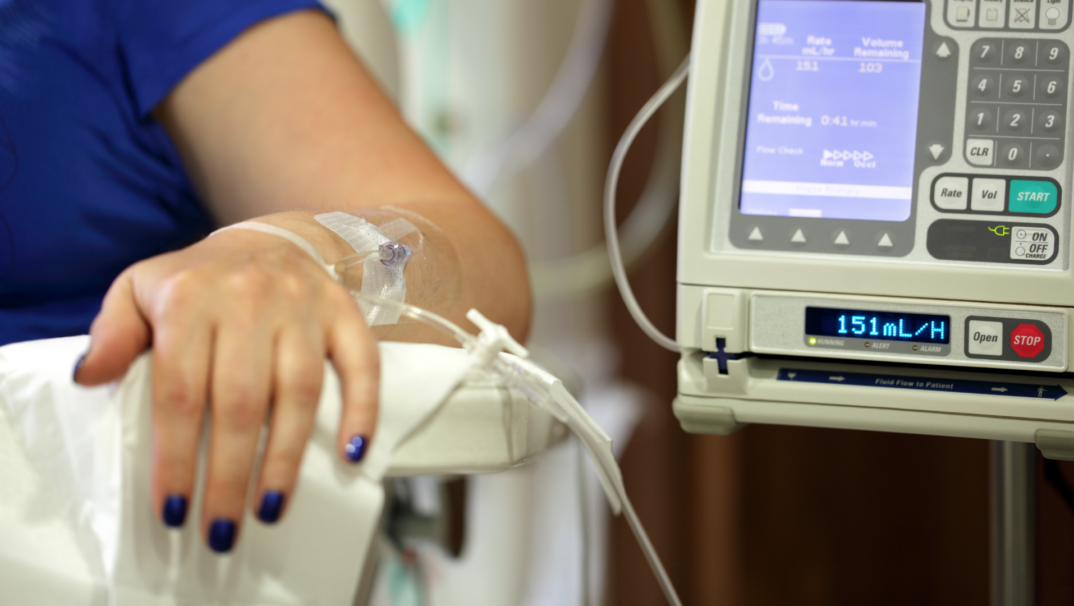
[(6:25)] Dr. Krupa: Yeah, absolutely. So I just had this conversation last week from an individual who came in that contacted us from, um, a state that was actually across the country, very eager to participate. And one of the first things that we encourage patients to do is to share their records. And the reason we do that is that, um, the study has very strict criteria, uh, what we call inclusion criteria, meaning what enables you to be a part of the study that you currently, um, have either clinically, medically, or, you know, um, part of just your day-to-day life, and then your exclusion criteria, which is something that would prevent you from being in the study. So those criteria really dictate if somebody is even worth moving on to the next step. If the individual passes that n- that first step, then the next step would be inviting the patient to come in for what we call a screening visit. And during that screening visit, we’ll kind of revisit again those criteria in case any of them have changed, and then we’ll look at different markers in their blood and various different things on their MRI, their exam, um, and again, their social history that would, um, help for us and the patient to decide if it’s worth moving on to the next step. Then the next part that we kind of take into account is distance and proximity. And the reason for that is, like I mentioned, this is a very, uh, this is a very initial study where safety of the, of, is of the utmost importance. So we really try to make sure that the patient is able to commit to the multiple visits that are required. One of the first visits that’s required if the patient passes screening is they’re going to have to come in to have their cells removed from their blood, which is called apheresis. Those cells are then shipped out, and the patient is sent home while those cells are genetically modified. After that, if the cells are viable and if everything works well, we then the next step and the next visit is having the patient come in for chemotherapy. And after chemotherapy, the patient then has to have almost a 10-day stay, um, to be observed, um, during which the, on the first day, those cells which were genetically modified are reintroduced to the patient after they receive their chemotherapy. So it’s certainly a very, uh, time-consuming, emotionally involved, physically involved, um, uh, st- you know, process, which, uh, the patient also have, has to have a good social support system in order for us to know, uh, that this would be beneficial for them and, um, you know, that they’re able to tolerate it.
[(9:07)] Stephanie: Yeah. It’s definitely, you know, participating in any drug trial, you’re really pioneering these new treatments. There are definitely unique aspects to the CAR T therapy, and I think when people hear the word chemotherapy in particular, that’s gonna stand out to people. So why is that chemotherapy component necessary, and what does the treatment and recovery period actually look like?
[(9:30)] Dr. Krupa: Yeah. That’s a great question because I think that’s actually when most patients’ antennas go up because I think when they hear about CAR T and they kind of read about it, they just assume that’s the only portion of their immune system that’s going to be modified. But actually, and I think you used this word before, um, rebooting the immune system is exactly what we’re trying to do. So going back to understanding how autoimmune conditions work, you have an overactive immune system and an immune system that’s miscommunicating. So just like, you know, we would tell, um, you know, a lot of times IT support tells us to shut our computer off and turn it back on, that’s exactly what we’re doing with the immune system. We’re giving it chemotherapy to ablate or take away those, uh, misfiring or miscommunicating immune cells, and then we’re reintroducing after the immune system is shut down, new genetically modified cells so that the immune system can kind of recalibrate and recommunicate properly.
[(10:32)] Stephanie: Yeah, and so in the short term, right, you’re needing to go through infection precaution, staying in the hospital like you mentioned.There, you can bet on needing to take time away from work and family and caregiving. But as you said, the trade-off is then the immune system reboots, and you have normal B and T cells, right?
[(10:53)] Dr. Krupa: Exactly. So part of the process and the commitment to the clinical trial is that we have an oncology team that works with us, and the oncology team, along with ourselves, follow the patient’s white blood cell counts and various different factors to determine how long they might have to be on infection precaution for, what foods they may be allowed to eat. So for example, you do have to avoid any kind of raw fruits and vegetables. Um, you know, I love sushi, so you can’t eat sushi-
[(11:23)] Stephanie: Mm-hmm.
[(11:23)] Dr. Krupa: For a period of time. Um, and then certainly staying away from infectious, uh, you know, uh, crowds. Um, even the people at home, your loved ones, if you know that they’re sick, you might have to wear a mask and avoid them for a bit of time. And then the other most important thing that I like to caution patients on is that you do have to get vaccines because your existing immunity against certain infections is also wiped out when you get chemotherapy. So that’s an important consideration to take is that you will have to be revaccinated for conditions like measles, mumps, rubella, et cetera.
[(12:00)] Stephanie: Hmm. That’s so fascinating. But, you know, the trade-off again is hopefully the rebooted immune system doesn’t attack in the same way it used to, and you’re not undergoing that chronic, uh, immune suppression that some of the meds come with. So th- there’s an interesting trade-offs, but I know that CAR T in of itself, like many treatments, um, can have some serious side effects. So what are the major risks that participants need to understand?
[(12:27)] Dr. Krupa: Yeah, um, so I think one of the most important and, uh, widely known, uh, side effects of CAR T therapy in the oncology world is called the cytokine release syndrome, and that syndrome, or CRS for short, is what happens when you introduce something novel to the body. The body’s innate response is to overreact to make sure that it’s protecting itself. So again, with the introduction of these genetically modified cells, just like you would in a transplant patient, the body may initially reject those CAR T cells, and a normal response is to release inflammatory markers to then call in other immune cells, which are usually good at fighting off things that shouldn’t be there. So as a result of the inflammatory response, you can have mild symptoms such as a fever, or it can be as severe as organ dysfunction. So we certainly wanna make sure, uh, that patients are aware of this, that they know that this is a very, uh, common risk that can occur, especially in the oncology population we’ve seen it. And then more importantly, that’s the other reason that we keep patients in the hospital for 10 days after the procedure. Because a lot of times patients are like, “Well, if the chemotherapy is only one or two days and I’m getting the genetically remodified cells, why do I need to be in the hospital for, you know, for a while? What’s the reason for that?” And that’s one of the most important reasons, because this syndrome occurs very typically in the first seven to 10 days. The other side effect that oc- can occur is, um, called the immune effector cell associated neurotoxicity syndrome, also known as ICANS. And ICANS is one of those things that’s very similar to CRS or the cytokine, uh, release syndrome, but the difference is, is that in this case, those inflammatory markers reach the brain and can cause focal neurological symptoms. So again, extremely important that we keep patients in the hospital to make sure that they are closely monitored. And the nice thing about both of these conditions is, is that, again, we’ve borrowed from the oncology world where we have treatments available to treat these two conditions, but the most important thing is that we catch it in time. So by keeping the patients in the hospital, alerting them that these things can occur, making clinicians and other staff members aware, um, is an important part of recognizing this and treating this.
[(15:00)] Stephanie: Yeah. And another benefit of, again, learning from the oncology world and the treatment experience and translating that into the MS space. So let’s, let’s imagine for a moment that CAR-T down the line does prove to be both safe and effective for MS. What could make it fundamentally different than the treatments we have available today?
[(15:23)] Dr. Krupa: Yeah, and that’s such a hopeful question, um, that I love, uh, answering, but at the same time I feel a little bit of frustration. So much like other clinical trials and other therapies that we have available, many times it takes, um, quite a bit of time before we have the comfort and the evidence, more importantly, to say that if this therapy works, it might mean that you don’t have to take consistently a medication. We don’t know if one CAR-T transfusion would be enough, but if that’s the case, then that would mean that patients no longer have to take a daily, weekly, monthly, or even an annual or biannual medication, which is, uh, you know, very hopeful and probably as close to a cure as we have right now.
[(16:16)] Stephanie: And then there’s also the hope that we all have that some- someday we’ll find a DMT that really works for the progressive side of MS. And are these trials being done in both relapsing and progressive MS?
[(16:27)] Dr. Krupa: Currently, the study that we’re doing does enroll both relapsing patients and progressive patients. However, I think the tricky part and the frustrating part for patients is that most of the patients that are allowed in the progressive cohort do have to be ambulatory to a certain extent. And that’s the difficult part, is that by enrolling these patients, will those results also be applicable for patients that might be a little bit further along? And that’s kind of the, you know, the difficult, um, part that we as researchers and as clinicians have to sometimes struggle with because these trials are really meant to look at safety. Um, so we struggle with how do we then take these lessons that we’ve learned and then really implement them in day-to-day, uh, you know, patients.
[(17:18)] Stephanie: That is definitely one of the… Both as a person with MS and as a clinician, it is hard to see tr- drug trials include people, you know, like you said, who are relatively mobile, early in the disease course, don’t have a lot of comorbidities, and I get asked that question all the time. Like, “Why don’t trials include people who look like me?” Could you speak a little bit about why the inclusion and exclusion is so critical for trials like this?
[(17:45)] Dr. Krupa: Yeah, absolutely. Um, so I think one of the difficulties with science is that there are so many different outcomes that can occur, and, um, that’s just life, right? So one of the things that, uh, when you take something like a clinical trial where you’re looking for an objective answer, you wanna eliminate as many variables as possible, and we also want to see if the actual outcome is related to the disease, or could it be related to something else. So inclusion and exclusion criteria are very tightly defined in order to make sure that the answer we’re getting is actually answering the question that we initially started out with. So if the question in this particular stage of the CAR T study that we’re doing is, “Is this therapy safe?” then we wanna make sure that we’re really limiting the population, we’re limiting the amount of, um, existing conditions that the patient may have. And especially for progressive patients, a lot of times as the disease progresses and the patient becomes less ambulatory, they’re more likely to have, uh, infection risks and things like that, which we cannot control for. So we really wanna make sure that these patients that have progressive disease are the fittest patients and the most likely to not have a poor outcome. So it’s actually looking at the patient safety as well. The last thing we wanna do is introduce something where the risks are unknown, and then we cause more harm than doing good.
[(19:19)] Stephanie: Yeah, and then after a drug comes to market, after being studied in this sort of optimized clinical trial population, that’s where the shared decision-making and the doctor that knows you well, right, and the, and the patient’s circumstances comes in. So how do you talk to patients about applying clinical trial data to, to them personally and, and their overall health?
[(19:44)] Dr. Krupa: Yeah, I mean, it’s funny because I think, um, more and more these days patients come in very well-educated, and I would say that the patients who actually pursue clinical trials are the ones that have really done their research. So I actually think that when I sit down to have a conversation about a patient and they’ve come to that stage where they’re now asking me about a clinical trial, I already know that they’ve done a little bit of homework, which I love. I think, um, you know, platforms such as this, podcasts, all the data that we have available now also really helps to drive the interest in clinical trials. So the first step is me kind of figuring out where’s the patient at. So I’ll ask them, I said, “Well, you know, what have you read so far?” And a lot of times the patients will say, “Well, this is what I’ve read.” And then we kind of navigate the conversation based on that, making sure that we touch upon points such as, again, commitment. You know, what does it mean to be a part of this study? What are we going to need to do? Um, you know, maybe we have patients who might not have had MRIs in the last few years because they were labeled as progressive, and we might not know, you know, where they are in their disease. So it’s important to kind of gather our data, make sure that they understand what the commitment is, and then we kind of lay out what some of the next steps would be, and we kind of just go from there.
[(21:05)] Stephanie: Yeah. And if anybody is listening to this and they’re interested specifically in a CAR T cell trial, how can people find the trials that are going on and learn whether they might be eligible?
[(21:16)] Dr. Krupa: Yeah, that’s, that’s a really great question, and I think most patients have really found, uh, their way to us through, uh, platforms such as clinicaltrials.gov, uh, you know, websites and organizations such as yours, um, and in addition to the National MS Society, CMSC, and then, uh, really just, it’s interesting, but just typing in clinical trials that are ongoing, uh, patients are sometimes able to find it that way as well.
[(21:43)] Stephanie: Yeah. And that’ll show you sites nearby, their contact information, right? And then of course, as you mentioned earlier, you do have the option of tr- of traveling to a site if you don’t have anything in your state.
[(21:57)] Dr. Krupa: Yeah, absolutely, and I would say, you know, one of the things that I love about, um, the MS, uh, community in regards to clinicians, um, and even patients, is that everybody is very helpful. So I’ve, we’ve actually had, um, I have colleagues in the tri-state area who have said, “Hey, listen, I have a patient who might be really great for you. Would you be willing to look at their records? And, you know, if they’re interested, can they reach out to your research team?” So I absolutely feel that, you know, there’s solidarity in numbers, so I think that it’s a great way to also just, uh, be aware of what’s going on and then share the information.
[(22:32)] Stephanie: Yeah. Well, thank you for giving such a great overview of CAR T therapy and where it is right now in the research world, and thank you for being here and speaking with us today.
[(22:45)] Dr. Krupa: Absolutely. Thanks for inviting me, Stephanie. This was great.
[(22:49)] Stephanie: Thank you for listening to this episode of the Can Do MS podcast. If you liked this episode, please leave us a rating and review on Apple Podcasts or Spotify. We really appreciate your feedback. We’d also like to thank Bristol Myers Squibb for their support of this episode of the Can Do MS podcast. Until next time, be well. Have a great day.
[Music]
[END]
This podcast is possible thanks to the generous support of the following sponsor:

Learn More...
But wait, there's more...
View All Related to Daily Life with MS: Treatment