Author
Ahmed Z Obeidat , MD, PhD

Close
Sponsored by Bristol Myers Squibb
14 Oct 2026 | ~11:13 Engagement Time
CAR-T cell therapy is an experimental and novel treatment approach currently being tested in a small number of people with multiple sclerosis (MS), and it remains in early-phase clinical trials. Currently, this is not approved for MS, and it is far too early to determine whether it is safe or effective for MS. This article explains what CAR-T is, why clinicians and researchers are interested in it for MS, what the treatment involves, and what has been reported so far. If you are living with MS, the most important message is simple: keep taking the treatment your neurologist has prescribed, and if you are curious about CAR-T, ask about research studies.
CAR-T is a treatment that uses a person’s own immune cells or immune cells from a donor, re-engineered in a laboratory, to find and remove a specific type of cell in the body. “CAR” stands for chimeric antigen receptor: a human-made sensor added to T cells (a type of white blood cell) that enables them to recognize a target on the surface of another cell. Once the modified T cells are returned to the body, they seek out any cell carrying that target and break it down.
CAR-T was first developed for blood cancers such as leukemia and lymphoma, and it has been approved for those cancers since 2017. In those cancers, the target is usually a surface marker called CD19 on B cells. Because B cells also play a role in several autoimmune diseases, researchers began testing CD19 CAR-T in conditions such as lupus and myasthenia gravis, and more recently in MS. Most of the CAR-T products being studied in MS target CD19; a few target other B-cell markers and, in the future, could also target other immune cells.
B cells are now understood to play a central role in MS, which is why several MS therapies, also known as anti-CD20 monoclonal antibodies (ocrelizumab, ofatumumab, and ublituximab), work by depleting them. These drugs are administered as repeated infusions or injections and primarily target B cells circulating in the bloodstream; because they are large, they cannot enter the brain or spinal cord to directly address inflammation within these structures.
The theory behind CAR-T in MS is that some B cells become established within the brain and spinal cord, hiding behind the blood-brain barrier, where antibody-based drugs reach them poorly, as described above. These trapped immune cells are thought to drive the slow, smoldering inflammation that contributes to progression even when relapses and new MRI lesions have stopped. While this relationship is not fully proven, researchers hope that CAR-T cells, living cells that can multiply and travel, may reach that compartment (the central nervous system) in a way that the current approved anti-CD20 antibodies cannot.
A second idea is the “immune reset.” Rather than suppressing the immune system indefinitely, CAR-T aims to deeply deplete B cells so that when they are reformed by the bone marrow, they are naive, without the memory of attacking the brain/spine or optic nerves. This raises the possibility of a single treatment rather than ongoing therapy. Both ideas are plausible and supported by early laboratory findings, but neither has been shown to translate into better long-term outcomes for people with MS, as this is still so early in the research process.
Currently, most studies are focusing on progressive MS, both primary progressive (PPMS) and secondary progressive (SPMS), and more specifically on people whose disease continues to worsen despite standard treatments. Relapsing MS already has more than twenty approved disease-modifying therapies (DMTs), many of which work well to reduce relapses and new inflammatory lesion formation in the brain and spine. So, the main reason for initially focusing on progressive MS is the unmet need for therapies for people who are experiencing disease worsening independent of relapses. This is understandable, as CAR-T therapy is still in an early investigational stage and safety is not well understood; thus, a risk-benefit discussion is important between the person living with MS and the treating investigator. It is expected that if CAR-T is proven to be a relatively safe option for people with MS, expanding the studies to include more MS patients, earlier in their course, may happen.
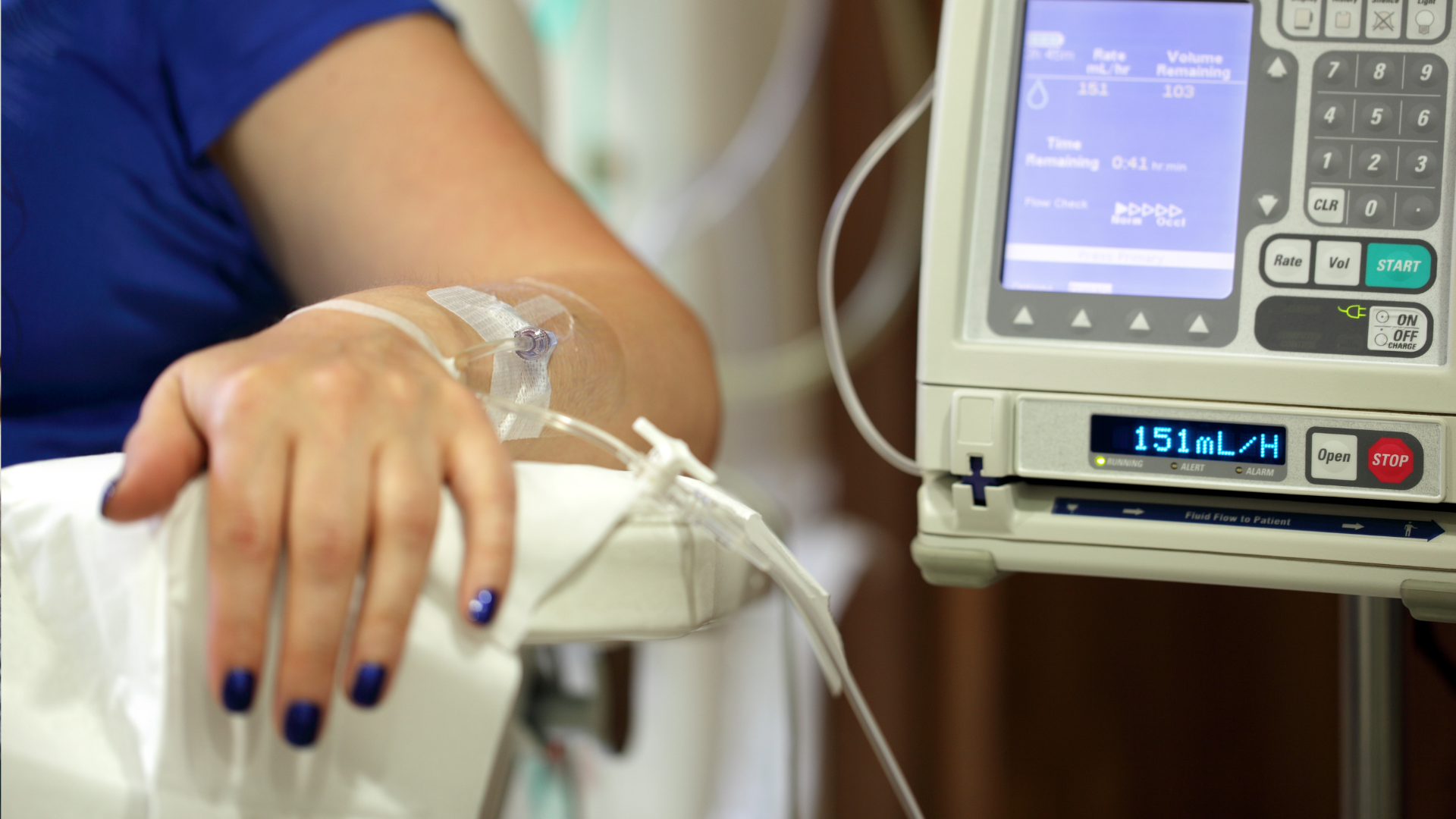
CAR-T is not a pill or a routine infusion. It is a multi-week process built around a single dose of cells, and most of it happens at a specialized center and requires hospitalization.
The screening and infusion typically take one to two months. One point worth emphasizing: once the cells are infused, they cannot be removed. Unlike a drug that can be stopped, this is a one-way step. I often tell my patients that if they get CAR-T cells, they are unlikely to qualify for future clinical trials, since many other trials cannot enroll participants exposed to cellular therapies, which can have prolonged effects that cannot be reversed.
At this time, very little has been shown as these are early studies. The published and presented MS experience so far involves roughly a small number of people worldwide, in studies with no comparison group, no blinding, and short follow-up. These are the earliest human studies, designed to answer: “is this safe enough to keep going?” rather than “does this work?”
With that framing, here is what has been reported:
Taken together, the treatment appears deliverable, the cells reach the central nervous system, and the immune changes are real and measurable. What has not been shown yet is whether any of these effects slow disability over years or whether CAR-T is better than the treatments we already have. In a handful of patients without a control group, apparent improvement can reflect natural fluctuation, expectation or anticipation of improvement, or the effects of the chemotherapy and intensive care surrounding the treatment. Only larger randomized trials can separate those explanations. It is expected to see many additional reports from ongoing studies over the next few years.
CAR-T has well-documented serious risks, learned from more than a decade of use in cancer treatment:
This field is also evolving in real time, not always in a reassuring direction: in 2026, several CAR-T trials for autoimmune disease were paused after severe inflammatory complications, including deaths, among participants. Those events remind us that the risks are real, and that close monitoring is essential. It is important to remember that these risks are acceptable in a research setting for someone with progressive disability and no remaining options, and that they are evaluated by an experienced team and weighed against anticipated benefits. Indeed, they would not be acceptable for someone who is doing well on an existing therapy.
The short answer is no.
CAR-T is not approved anywhere for MS and the only way to receive it for MS is to enroll in a clinical trial, or, in rare cases, through a compassionate-use pathway arranged by a physician for someone who has exhausted all options. Any clinic offering to sell you CAR-T, stem cell therapy, or an “immune reset” for MS outside a registered trial should be treated with serious suspicion. These offers exist, sometimes locally or abroad, at great cost, and they are not the same thing.
If you are on a disease-modifying therapy, keep taking it. Stopping or delaying MS treatment while waiting for an experimental therapy is among the most harmful responses. Disease activity can return, sometimes severely, after an effective therapy is stopped, and the damage that accumulates in the meantime is generally permanent. The therapies available today, especially when started early, are the most reliable tool we have for protecting your future function. It is important to discuss your individual case with your doctor.
As a reminder :the people enrolled in these trials have, by design, already failed standard treatments. Doing well on your current therapy is not a reason to seek something riskier.
If you are interested in CAR-T, the most useful thing you can do is take part in research, and that includes research other than CAR-T trials.
Please remember that participating in research is voluntary and a real contribution. It is also how a treatment like this eventually becomes available or is shown not to work, which is equally valuable to know.